



9 Food Supplement Trends and Innovations to Watch in 2027
Laboratoire PYC Insights — September 2026
Longevity, protein, microbiome, fibre, creatine, magnesium, collagen… Consumer expectations are evolving. New areas of innovation are emerging for brands.
In 2027, consumers will be looking for supplements that are more targeted, more transparent and easier to incorporate into their daily routines. The quality and form of active ingredients will be key. Taste, format and the overall consumption experience will also make a difference.
For brands and nutrition professionals, these trends are opening up new opportunities for innovation.
Here are 9 trends and innovations to watch in 2027.
What are the main food supplement trends for 2027?
Nine trends could have a particularly strong influence on food supplement innovation in 2027: longevity, protein, nutrition related to GLP-1 treatments, the microbiome and fibre, creatine, different forms of magnesium, collagen, all-in-one formulas, and sensory appeal.
- Longevity: towards a more holistic approach to ageing well.
- Protein: applications extending beyond sports nutrition.
- GLP-1: new needs linked to changing nutritional intake.
- Microbiome and fibre: digestive health gaining greater visibility.
- Creatine: new applications beyond sports nutrition.
- Magnesium: growing attention to different forms.
- Collagen: greater focus on peptides, dosages and sources.
- All-in-one: formulas designed as a daily ritual.
- Sensory appeal and packaging: taste, texture, format and experience are becoming key drivers of innovation.
Food supplement market: what is the outlook for 2027?
The European food supplement market continues to grow. In 2025, it represented €19.9 billion in sales, up 5.9% compared with 2024 [1].
In France, market dynamics continue to evolve according to the benefits consumers are seeking. During the latest months analysed in 2026, pharmacy sales increased notably in digestive health (+4.6%), sleep and stress (+7.3%), sports (+32.5%) and hydration (+50%).
At the same time, innovation remains particularly important: the freshness index — i.e. the contribution of innovations to sales — stands at 20% for food supplements, compared with 13% for other consumer healthcare products [1] [2].
These developments reflect a market in which consumer expectations are rapidly diversifying. At the same time, new uses and ingredients are gaining visibility. Which trends could have a particularly strong influence on food supplement development in 2027?
Key takeaway: market growth, the importance of innovation and rapidly evolving consumer needs are creating new development opportunities for food supplement brands in 2027.
Longevity: a major food supplement trend for 2027
Longevity is emerging as a major trend to watch in the food supplement market in 2027. Beyond the desire to live longer, consumers are increasingly interested in maintaining their vitality and capabilities over the long term.
Longevity is therefore becoming distinct from healthy ageing: the goal is no longer simply to support the ageing process, but to help maintain a good quality of life over time.
This shift is already visible in product launches. In 2025, at least one longevity-related claim appeared on 50% of new food supplements launched [4] [9].
Longevity is therefore becoming a cross-category territory that can encompass multiple benefits: muscle vitality, cognitive function, anti-ageing beauty, mobility, cardiovascular health and more.
Key takeaway : for brands, longevity could become a cross-category innovation territory, combining several benefits within a single approach: vitality, cognition, beauty, mobility or nutrition.
Protein: the trend moves beyond sports nutrition
Long associated with sports performance and muscle building, protein is now expanding into broader applications related to nutrition and everyday wellbeing.
Worldwide, 30% of consumers say they have increased their protein intake to improve their diet and lifestyle [4].
In the UK, 51% of Millennials look for higher-protein foods as part of healthy eating [8].
The trend is also continuing in snacks: 43% of new bars feature a “high/added protein” claim, compared with 30% in 2020/2021 [5].
La tendance se poursuit aussi pour les snacks : 43 % des nouvelles barres affichent une allégation « high/added protein », contre 30 % en 2020/2021 [5].
What protein innovations can we expect in 2027?
Protein could continue to move beyond the boundaries of sports nutrition and into more lifestyle-oriented products designed for everyday consumption.
Plant-based alternatives also represent an area of innovation. Soy remains the leading plant protein in Europe today, closely followed by pea, while fava bean is emerging as a new source [7].
For brands, the opportunity could therefore be twofold: diversifying protein sources and developing new applications beyond the traditional codes of sports nutrition.

GLP-1 and nutrition: supporting reduced nutritional intake
The rise of GLP-1 treatments is creating new nutritional needs. Reduced appetite can lead to lower intake of certain nutrients.
Protein, fibre, vitamins, minerals and hydration are key areas to watch.
In 2027, innovation could focus on nutrient-dense solutions that are easy to consume and suitable for smaller food intakes [5].
Microbiome and fibre: digestive health accelerates
The microbiome and fibre are emerging as key areas of innovation to watch in 2027. Awareness of the microbiome is increasing: 49% of consumers had heard of it in 2024, compared with 15% in 2022 [4].
Prebiotics are growing strongly within functional innovations linked to longevity, with a +48% compound annual growth rate (CAGR) between April 2021 and March 2026. Postbiotics are another area to watch.
Fibre is also benefiting from the “fibre gap” and “fibremaxxing” trends.
In 2027, fibre + protein combinations could accelerate, particularly in powders, snacks and everyday solutions.
Creatine: a trend moving beyond sports nutrition
Creatine is gradually expanding beyond its traditional sports nutrition territory and attracting interest from new consumer groups.
In the UK, 9.4% of sports nutrition consumers surveyed in November 2025 said they had used creatine during the previous three months [6].
What to watch in 2027: creatine could pave the way for new applications, formats and ingredient combinations.
Magnesium: bisglycinate, citrate, malate… towards more premium formulas
Magnesium remains a staple, but consumer expectations are becoming more specific. Consumers are now looking for particular forms, including bisglycinate, citrate, malate, taurate and liposomal magnesium.
Bioavailability and absorption are therefore becoming important criteria for differentiating formulas.
In 2027, the choice of magnesium form will be a genuine formulation and differentiation lever for brands.
Collagen: peptides, dosage and source become differentiation criteria
Collagen remains a strong category, but the market is evolving. Differentiation is shifting towards targeted peptides, bioavailability, molecular weight and source.
Alongside bovine and marine collagen, we have already observed new opportunities emerging, including eggshell membrane and plant-based “collagen-like” solutions.
In 2027, peptide type, dosage, source, format and targeted benefit will be key differentiation levers.
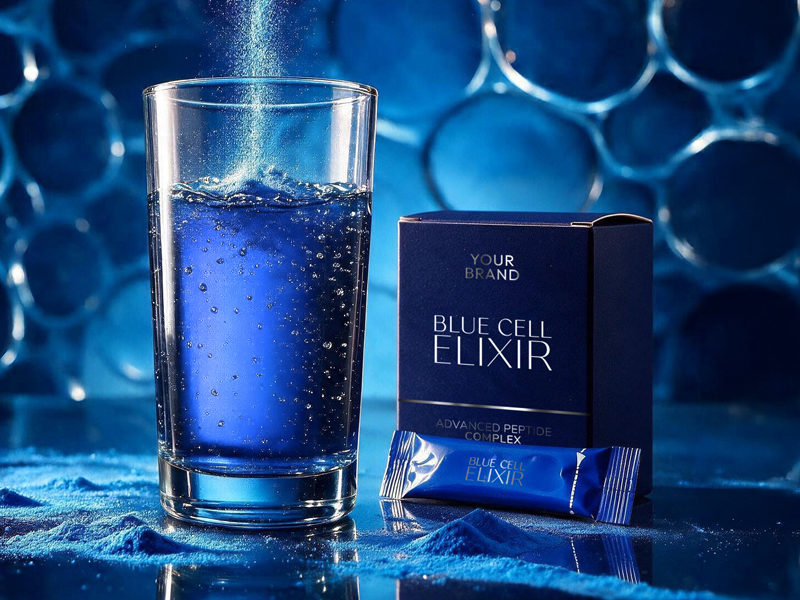
Discover our latest nutricosmetic formula featuring next-generation peptides: Blue Cell Elixir.

All-in-one supplements: towards convenient everyday formulas
60% of consumers worldwide say they take a long-term approach to their health.
As the number of active ingredients continues to grow, the “all-in-one” approach meets a need for simplicity: bringing several benefits together in a single daily solution.
In 2027, the challenge will be to turn this intention into a simple ritual: one formula, one step, one habit.
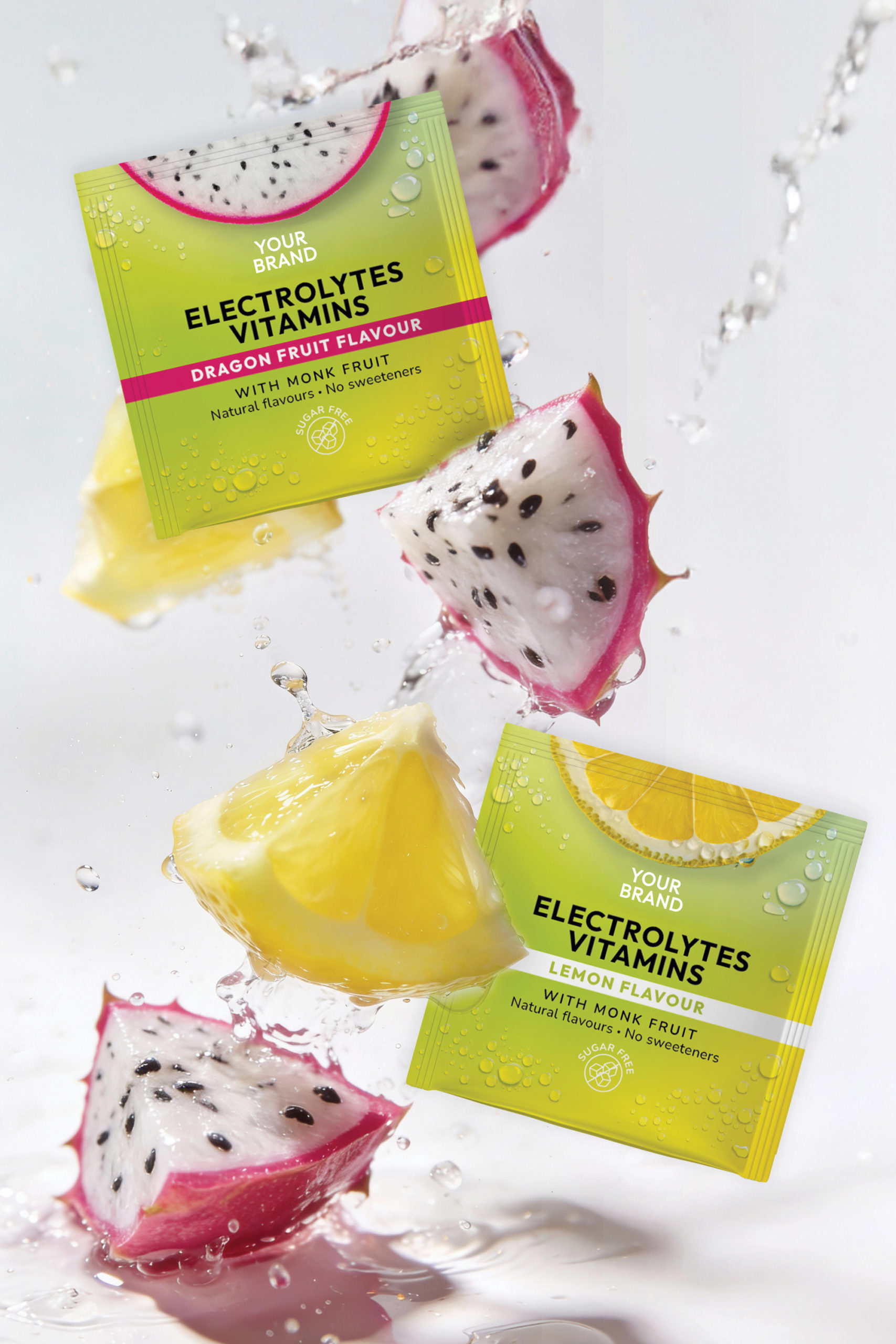
Sensory appeal and packaging: experience becomes key
Efficacy is no longer enough. Food supplements are becoming a more enjoyable and desirable daily ritual.
Sensory appeal, low-sugar formulations and fruity or floral notes are drawing inspiration in particular from K-Beauty and Inner Beauty.
Packaging is evolving too. Sticks, sachets and doypacks meet on-the-go needs and make products easier to consume.
Doypacks are expected to achieve a CAGR of 7.5% [10].
Key takeaway for 2027: taste, texture, convenience and packaging are becoming differentiation levers in their own right when developing food supplements.
Efficacy, transparency and price remain essential
Trends evolve, but the fundamentals remain the same: efficacy, quality, transparency and price.
In France, 79% of buyers prefer supplements without additives. Traceability, origin, purity and certifications also help build trust [3]. Demand for clean-label formulas remains strong.
Finally, one in three consumers remains highly price-sensitive.
What Food Supplement Products Should Brands Develop for 2027?
In 2027, consumers will be looking for supplements that are targeted, effective, transparent and easy to consume.
Longevity, protein, the microbiome, fibre, creatine, magnesium and collagen are opening up new areas of innovation.
But ingredients alone are no longer enough. Evidence, formulation, taste, texture, format and packaging will make the difference.
Looking to develop your next food supplement innovation? Our teams can support your project from concept and formulation to industrialisation and packaging. Contact us to discuss your food supplement development project.
FAQ – Food Supplement Trends for 2027
What are the food supplement trends for 2027?
Key trends to watch in 2027 include longevity, protein, nutrition related to GLP-1 treatments, the microbiome and fibre, creatine, different forms of magnesium, collagen, all-in-one formulas and sensory appeal.
Which ingredients will be trending in food supplements in 2027?
Protein, fibre, prebiotics, creatine, magnesium and collagen peptides are among the ingredients and categories attracting particular attention. Beyond the ingredient itself, its form, source, dosage and level of supporting evidence are becoming key differentiation criteria.
What innovations can be developed in food supplements?
Innovation can involve formulation and active ingredients, but also taste, texture, format and packaging. All-in-one formulas, protein-fibre combinations and convenient formats such as sticks and doypacks are examples of this evolution.
How do you develop a custom food supplement?
Developing a custom food supplement involves defining the concept and target audience, selecting ingredients, formulation, testing, taking regulatory requirements into account, followed by industrialisation and packaging.
SOURCES
[1] IQVIA, 2025.
[2] NFBD, 2026.
[3] Toluna for Synadiet, february 2026 – French market.
[4] FMCG, 2025.
[5] Mintel GNPD, 2025-2026.
[6] Mintel, may, november 2025.
[7] Innova Market Insights, 2025-2026.
[8] Solina Health Survey, 2026.
[9] Euromonitor International VIA, 2025.
[10] Packaging Market Insights, may 2026.
[11] Market & Trend Review, june 2026.

You might also like
-
Blue Cell Elixir: A Next-Generation Nutricosmetic Supplement with Collagen Peptides https://www.laboratoire-pyc.com/wp-content/uploads/Blue-cell-elixir-1024x512.jpg 1024 512 admin-pyc https://secure.gravatar.com/avatar/060aa7b1cd990fed35cd3c321b986affaae60821158589d100615756ba6afc48?s=96&d=mm&r=g
-
Menopause Food Supplements: Developing an Effective and Differentiated Offering https://www.laboratoire-pyc.com/wp-content/uploads/complements-alimentaires-menopause-femme-1024x512.jpg 1024 512 admin-pyc https://secure.gravatar.com/avatar/060aa7b1cd990fed35cd3c321b986affaae60821158589d100615756ba6afc48?s=96&d=mm&r=g

-
Menopause Food Supplements: Developing an Effective and Differentiated Offering https://www.laboratoire-pyc.com/wp-content/uploads/Blue-cell-elixir-1024x512.jpg 1024 512 admin-pyc https://secure.gravatar.com/avatar/060aa7b1cd990fed35cd3c321b986affaae60821158589d100615756ba6afc48?s=96&d=mm&r=g